Place the Property Within Its Market
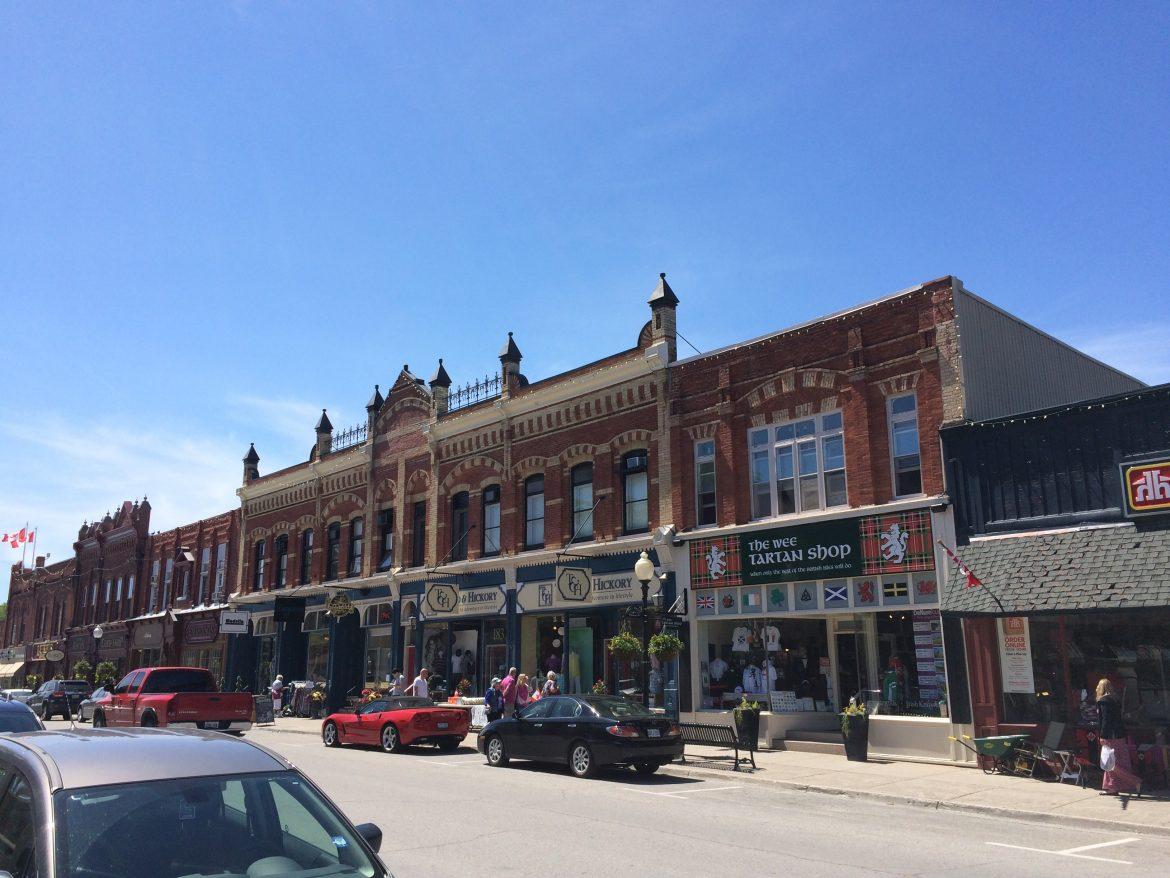
We determine whether a property belongs to the Toyota-adjacent industrial base, the downtown heritage retail core, or a highway commercial node near the 401/403 interchange.

Woodstock serves as Oxford County’s commercial hub, its economy anchored by Toyota’s manufacturing plant and a growing base of suppliers and logistics operations along the Highway 401 corridor. RealEx provides commercial real estate appraisal and advisory services in Woodstock, Ontario, anchored by the city’s automotive manufacturing base.
Woodstock sits at the crossroads of Highway 401 and Highway 403, and its industrial market runs directly through Toyota Motor Manufacturing Canada’s West plant. Current commercial activity backs that up directly: CBRE was marketing 670 Finkle Street, a 222,769-square-foot industrial facility on 11.92 acres, as of February 2026, and a separate 222,769-square-foot industrial building along Highway 401 is fully site-plan approved and servicing-ready for construction. A 104.7-acre parcel at the edge of Woodstock’s growth corridor, with roughly 48.39 acres designated Future Development for industrial or employment use, sits on Township Road 3 with frontage near both Toyota and Griffin Industrial Park, direct highway access, and existing servicing infrastructure nearby.
Toyota Motor Manufacturing Canada’s West plant, at 1717 Dundas Street, is the newest of the company’s three Ontario assembly facilities at roughly 1.8 million square feet, currently producing the RAV4 and RAV4 Hybrid. Announced in 2005 as a $1.1 billion investment and 2,000 new jobs, it was Canada’s first greenfield automotive assembly plant in nearly twenty years. Fifteen kilometres away, General Motors’ CAMI plant in Ingersoll anchors the other end of the same Highway 401 industrial corridor, and Woodstock’s city council has been preparing an additional 136 hectares of industrial land specifically to accommodate continued growth along that corridor. Griffin Industrial Park sits within this same automotive-adjacent industrial base.
Woodstock’s own commitment of 136 hectares of new industrial land is a direct, current policy signal for anyone evaluating land near the 401/403 corridor, since it indicates the city expects continued demand well beyond what’s currently developed. Development charges apply to new commercial and industrial construction citywide. As in every Ontario municipality, MPAC’s current assessment cycle rests on a 2016 base valuation date, meaning assessed value can diverge meaningfully from current market value in an industrial market moving as quickly as Woodstock’s right now, something RealEx accounts for directly in reports intended for financing or dispute purposes.

An automotive-industrial corridor like Woodstock’s rewards an appraiser who already understands supplier and logistics demand, not one learning it on the job. Alex Rance carries the AACI and P.App designations and the Personal Level Endorsement, and currently chairs the Appraisal Institute of Canada’s London Chapter for 2024 and 2025. He also owns and manages his own property portfolio in the region, with direct, practising experience in leasing, renovation, and land development approvals.

A Woodstock assignment follows four steps that account for the city’s mix of manufacturing and small-city commercial space:
Woodstock’s manufacturing base, downtown retail core, and institutional presence as county seat each bring their own reporting needs. We tailor every file to whoever’s going to use it next.
That mix of needs brings us clients such as:
Often, yes. Site-plan-approved, servicing-ready land, like the current Finkle Street and Highway 401 listings, trades on a different basis than land that’s close to the plant but still waiting on municipal infrastructure.
They anchor opposite ends of the same Highway 401 corridor and draw from a shared supplier base, so activity at one plant tends to influence land demand along the whole stretch between them, not just immediately around each facility.
It tells buyers and sellers the city expects sustained demand well beyond what’s currently built out, which supports current pricing on serviced and near-serviced parcels even before that new land comes online.
No. The Dundas and Huron Street retail core draws on local and regional shopping demand rather than the automotive supply chain, so a slowdown in vehicle production wouldn’t hit it the same way.
It sits within the same automotive-adjacent industrial base and tends to draw similar supplier and logistics tenants, so it’s a genuine comparable rather than a separate market, even though it isn’t immediately adjacent to the plant.
It doesn’t directly, current land pricing reflects today’s servicing, demand, and competing listings, not the plant’s original investment figures, which are historical context rather than a current value driver.
It depends on property type, size, and complexity, a downtown retail unit and an industrial parcel near the Toyota corridor are priced very differently. Contact RealEx directly for a quote specific to your property.
Beyond a current site plan, tax assessment, and lease documentation, servicing and site-plan-approval status carry real weight here given how much current pricing depends on how development-ready a parcel actually is.
If you need a commercial real estate appraisal or advisory support in Woodstock, Ontario, RealEx Inc. is ready to assist. Contact our team to discuss your property, its location and corridor, your timeline, and your reporting requirements.