Confirm the Governing Authority
We identify which local municipality’s Committee of Adjustment governs the severance, since Essex County itself isn’t the approval authority for these applications.

Essex County stretches across Ontario’s southernmost tip, where greenhouse and field agriculture have made it one of the most productive farming regions in North America. RealEx offers vacant, farm, and rural land appraisal across Essex County, Ontario, from greenhouse operations to severance and consent applications.
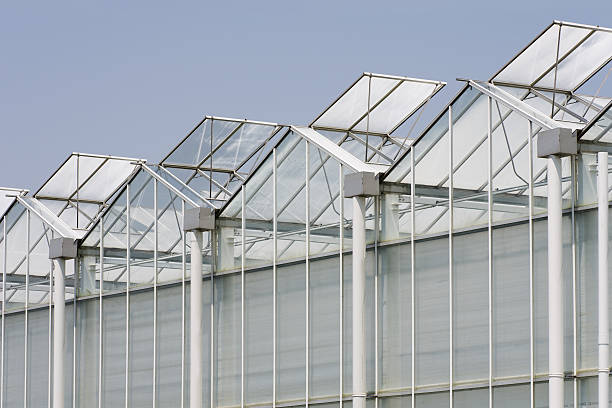
Essex County’s agribusiness sector is valued at roughly $3 billion and employs about 8,000 people, with greenhouse operations covering an estimated 2,300 acres, among the largest concentrations of greenhouse agriculture in North America. That specialized infrastructure, heating, lighting, and controlled-environment systems, carries value characteristics that a conventional field-crop comparable won’t capture, so RealEx assesses greenhouse property separately from surrounding farmland even when the two sit on adjacent parcels. Farm Credit Canada’s most recent reporting put Ontario farmland values up 2.2% in 2025, a useful regional benchmark alongside current local comparables.
Essex County’s own approval authority covers official plans, official plan amendments, plans of subdivision, plans of condominium, and part lot control exemptions, but the county is typically not engaged in day-to-day severance and consent decisions. Those go through each local municipality’s own Committee of Adjustment, whether the property sits in Kingsville, Leamington, Lakeshore, Amherstburg, Tecumseh, LaSalle, or the rural parts of the county outside Windsor. RealEx provides the market valuation work that supports these local applications, for the retained parcel, the severed parcel, or both, tailored to whichever municipality’s process governs the property.
Farm and rural comparable sales in Essex County are often more scattered geographically than urban commercial transactions, and greenhouse operations specifically require adjustments for specialized infrastructure that a conventional field-crop comparable won’t reflect. RealEx widens the comparable search deliberately where the immediate area doesn’t support a tight comparable set, and documents the reasoning behind each adjustment clearly enough to stand up to lender or Ontario Land Tribunal scrutiny.

Greenhouse property needs an appraiser who treats the controlled-environment infrastructure as its own asset, not an afterthought bolted onto the land value. Alex Rance holds the AACI, P.App, and PLE designations and chairs the Appraisal Institute of Canada’s London Chapter for 2024 and 2025. He also owns and manages a property portfolio of his own in Southwestern Ontario, so severance, consent, and land development approvals are processes he’s navigated firsthand, not just topics he advises on.

Severance and consent decisions in Essex County are made locally rather than by the county itself, and the type of land involved shapes the valuation approach from there. Our process reflects both of those realities:
Every assignment starts with the property itself: soil class, current use, existing infrastructure, and comparable sales specific to the township involved. From there, we apply the valuation method suited to the asset, whether that’s a greenhouse operation, field-crop farmland, or vacant rural land, producing a report built to hold up for financing, acquisition, or municipal review.
RealEx Inc.’s Essex County clients typically fall into a few categories, each with different reporting needs:
It depends on which of the seven local municipalities, Kingsville, Leamington, Lakeshore, Amherstburg, Tecumseh, or LaSalle, the property sits in. We confirm the correct committee as the first step on any severance-related assignment.
Heating, lighting, and controlled-environment systems represent a specialized, higher-value use that a conventional field-crop comparable doesn’t capture, so we assess that infrastructure on its own terms alongside the underlying land.
No. Greenhouse operations carry specialized infrastructure, heating, lighting, and controlled-environment systems that a conventional field-crop comparable won’t capture. RealEx values greenhouse property separately from surrounding farmland, even when the two sit on adjacent parcels.
There’s no fixed distance. What matters is whether there’s an actual rezoning application or documented buyer interest tied to a specific parcel, not just general proximity to a growth corridor like County Road 22.
Not necessarily. That figure is a provincial average from Farm Credit Canada; local factors like proximity to Windsor’s growth boundary or a parcel’s suitability for greenhouse conversion can push individual properties well above or below it.
Field-crop comparables are selected mainly on soil quality, drainage, and size. Greenhouse comparables also need to account for the age, capacity, and specialization of the existing structures, since two similarly sized greenhouse operations can differ significantly in value.
It depends on the property and whether both a field-crop and a greenhouse component need separate valuation. Contact RealEx directly for a quote specific to your application.
Yes. Reports are prepared to CUSPAP standards, which Canadian banks, credit unions, and Farm Credit Canada all require, including for the specialized infrastructure valuation a greenhouse financing application typically needs.
If you need a farm, greenhouse, rural, or vacant land appraisal in Essex County, RealEx Inc. is ready to assist. Contact our team to discuss your property, your severance or consent timeline, and your reporting requirements.